Sherry, an expert on the history of mid-twentieth century America, focuses on the 1920’s, 30’s, 40’s, 50’s, & 60’s, the time before and the direction after World War II, as being pivotal in the outlook of and on gay artists. (Sherry uses the word “queer” and it makes perfect sense.) The country’s changing perspectives were tremendous on homosexuality, artists, and people in general as developed by the main stream media of the time, politicians such as Joe McCarthy and critics/reviewers like Patrick Dennis*. It was a time of cultural growth that America had long desired and a quest for acceptance of a purely 'American' culture that the country had long coveted from the rest of the world, specifically “old” Europe.
Sherry points out that there was no “definable” American culture before WWII as far as most “modern” anthropologists and historians were concerned. He uses the idea that a country has a “culture” when it is seen to be exportable, and they were convinced the Europeans looked down on America because they believed the only true art that came from America was jazz and it wasn’t considered serious art.
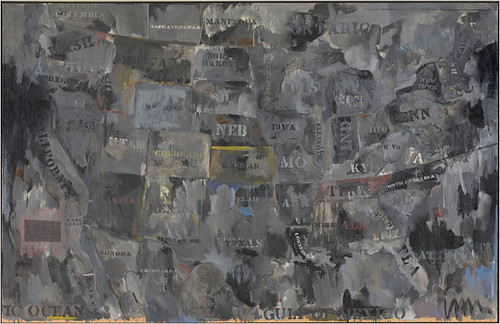
He traces the works of Copland, Bernstein, Barber, Menotti, Williams, Albee, Johns and other influential artists of the time - all queer - and how they were instrumental in the creation of an “American” culture that was finally accepted by the Europeans in earnest. Though the country was grateful, the media, straight cultural “doyens” and politicians were also in horror that it was all done by queers. World War II ended the xenophobia that existed from WWI; it gave the country a sense of power that was not felt before; it created an influence that the U.S. never had before this time; and it also sought an awareness of “masculinity” that was perceived to be paramount in the new world view. In addition, people couldn’t get passed personal petty prejudices and jealousies in which the works of queer artists played the major role in creating the long sought “American” culture.
If you couple this with the ensuing Cold War, a lot of frames of reference fall into place in the struggle that has been on-going between the queer and straight communities. The fear that ran through the arts specifically and the country in general, exacerbated by Senator McCarthy’s commie witch-hunt, brought about the change from an open-secret of queers existing in the population to the creation of the “closet.”
Interestingly, Sherry suggests the term “closet” might be traced to an article in Time magazine. Gays lived in a “closed” subgroup much like African-Americans, Latinos and other ethnicities who band together for a reliance on “self-sameness” both as a means of protection and just plain old having things in common. The “d” was turned into a “t” and the rest, as they say, is history.
McCarthy subpoenaed Aaron Copland to testify before HUAC because he not only thought Copland to be a “commie” but also one of them. Of course, it didn’t help that the Soviets liked Copland’s music and actually premiered a number of his works. President Eisenhower realized how important Copland’s work was for the country and intervened telling the senator to back off; McCarthy only called Copland to a private session. Quite ironic considering both McCarthy and his aide, Roy Cohn, were, you know, queer.
T The chapter on Samuel Barber is extremely heartbreaking. Sherry traces Barber’s success and naivete from his patrician beginnings in West Chester, Pennsylvania through the fiasco of the building and opening of Lincoln Center, the new home of the Metropolitan Opera. With the prior success of his opera Vanessa, Barber was the logical choice to create a purely “American” work for the opening. Lincoln Center was to be the new centerpiece of the recently established “American” culture, a destination to which lovers of the arts would flock from around the world. The center was a mess from its inception to its opening, even with some best intentions behind it, by bickering, politics, and egos.
When Barber’s opera Antony and Cleopatra bombed, as far as the critics were concerned, the failure of the opening was squarely put on his shoulders, but it was the impossible situation that he was put into by others. The extended argument for masculinity in the arts, the premise that everything had to reflect the new “culture”, and the American perception that “bigger is always better” may have caused the true failures of the opera. Subsequent productions have proven worthy.
T The straight MSM had a love/hate relationship with the queers and aghast as well as fascinated, or maybe titillated, by their successes and influences. Critics of the era were especially venomous and harsh, bringing forth theories that queers hated women designing clothes to make them look ugly, that there was a pathological problem with queers, or that playrights such as Albee and Williams actually were writing their plays with “homosexual” undertones and only covering it up to hide what they really were trying to spread. What has become known as the “homosexual agenda”, perhaps?
The subtitle of the book - "An Imagined Conspiracy" - demonstrates this idea. While it appeared to many of the time, as it does today, that a conspiracy was being orchestrated to make the arts in America “queer,” in effect, the conspiracy was against the queers. The MSM, the politicians, the critics, the psychologists and many other groups were so hellbent on the rest of the world seeing the culture of America as masculine and making it live up to the new American “empire” created by WWII, they used any and all means of repression, mostly innuendos, insinuations and aspersions, to destroy the emergence of a conjured up queer conspiracy .
America has always tried to hide away what she considered “dirty little secrets”. Nothing should tarnish the new empire. Everyone should fit into a mold, imagined or real. Better to oppress rather than to express.
Gay Artists in Modern America: an imagined conspiracy is more than a history of the time it takes place. It actually is a work that identifies the groundwork that was set and that distinguishes the influences on what is happening in America. The lives and works of the artists are fascinating, but they couldn’t imagine how they advocated a much broader impact that resonates in the fight for such things as ENDA, the Matthew Shepard Act, and marriage today. I highly recommend this book to any and all who have an interest in recent queer history and the influence it had and has. Michael Sherry must be commended for producing a book that parallels his other works on World War II and the ways it changed America.
*yes,
that Patrick Dennis, author
and nephew of the real
Auntie Mamei'm calling this a
book report for two of reasons.1. i'm not a reviewer; so i don't feel it would be right for me to say it is a
review. 2. i taught and worked in education for so many years; i assigned and graded hundreds of
book reports. i think it's only fair that i do what i had my kids do...